

Buying a property in Singapore is a major milestone. Whether it is a new HDB BTO, executive condominium or private condominium, most homeowners naturally start thinking about renovation, furniture and moving in once they receive their keys.
However, there is another important step that should come first — arranging a defect check in Singapore.
A property may look completed at first glance, but workmanship issues can sometimes be difficult to spot during a quick walkthrough. Checking the property before renovation gives homeowners an opportunity to identify and document these issues while the unit is still in its original condition. v
Why Property Buyers Should Check Their Home Before Renovation
Renovation can change many parts of a property.
Flooring may be overlaid, walls may be painted, carpentry may cover existing surfaces and electrical points may be altered.
Once renovation begins, determining whether a particular issue was part of the original property or caused during renovation can become more difficult.
This is why conducting a defect check before renovation can be useful.
It creates a clearer record of the property’s condition before contractors start work.
New Property Does Not Always Mean Defect-Free
Many homeowners assume that a newly completed property should be completely free from defects.
In reality, property construction involves numerous trades working on the same unit, including tiling, painting, plumbing, electrical installation, windows, doors and sanitary fittings.
Minor workmanship issues can therefore sometimes remain after construction.
Common observations during a property defect inspection in Singapore may include:
- Hollow floor or wall tiles
- Uneven tile installation
- Wall or ceiling cracks
- Paint and finishing defects
- Door alignment issues
- Window defects
- Scratched fittings
- Poor silicone or sealant finishing
- Plumbing fixture issues
- Floor trap concerns
- Damaged or poorly finished surfaces
Finding these issues early makes it easier for homeowners to organise and document them systematically.
BTO Defect Check in Singapore
For new BTO homeowners, key collection is often followed almost immediately by renovation planning.
But before your interior designer or renovation contractor begins work, consider completing a BTO defect check first.
Check areas such as the living room, bedrooms, kitchen, bathrooms, service yard and household shelter.
Tiles, doors, windows, walls, ceilings, sanitary fittings and other accessible areas should also be inspected carefully.
Once renovation starts, some original surfaces may no longer be visible.
For example, kitchen carpentry may cover walls while vinyl flooring may be installed over existing tiles.
This makes the period immediately after key collection particularly useful for carrying out the inspection.
Condo Defect Inspection
The same principle applies to newly completed condominiums and executive condominiums.
Condo owners may receive additional developer-provided finishes and fittings such as:
- Kitchen cabinets
- Wardrobes
- Countertops
- Appliances
- Bathroom fittings
- Timber flooring
- Balcony finishes
These areas should also be visually checked when taking possession of the property.
A condo defect check in Singapore can help homeowners record both workmanship issues and visible damage before moving in or commencing renovation.
Defect Check vs Renovation Defect Check
These two inspections happen at different stages of the property journey.
A new property defect check is normally carried out before renovation and focuses on the condition of the property as handed over.
A post-renovation defect check is conducted after renovation and focuses on the workmanship and finishing of renovation works.
For homeowners undertaking a major renovation, both stages can be useful.
Before renovation
Check the original property condition.
After renovation
Check completed renovation workmanship before final handover.
Keeping the two stages separate also helps distinguish original property defects from renovation-related issues.
What Happens During a Defect Check?
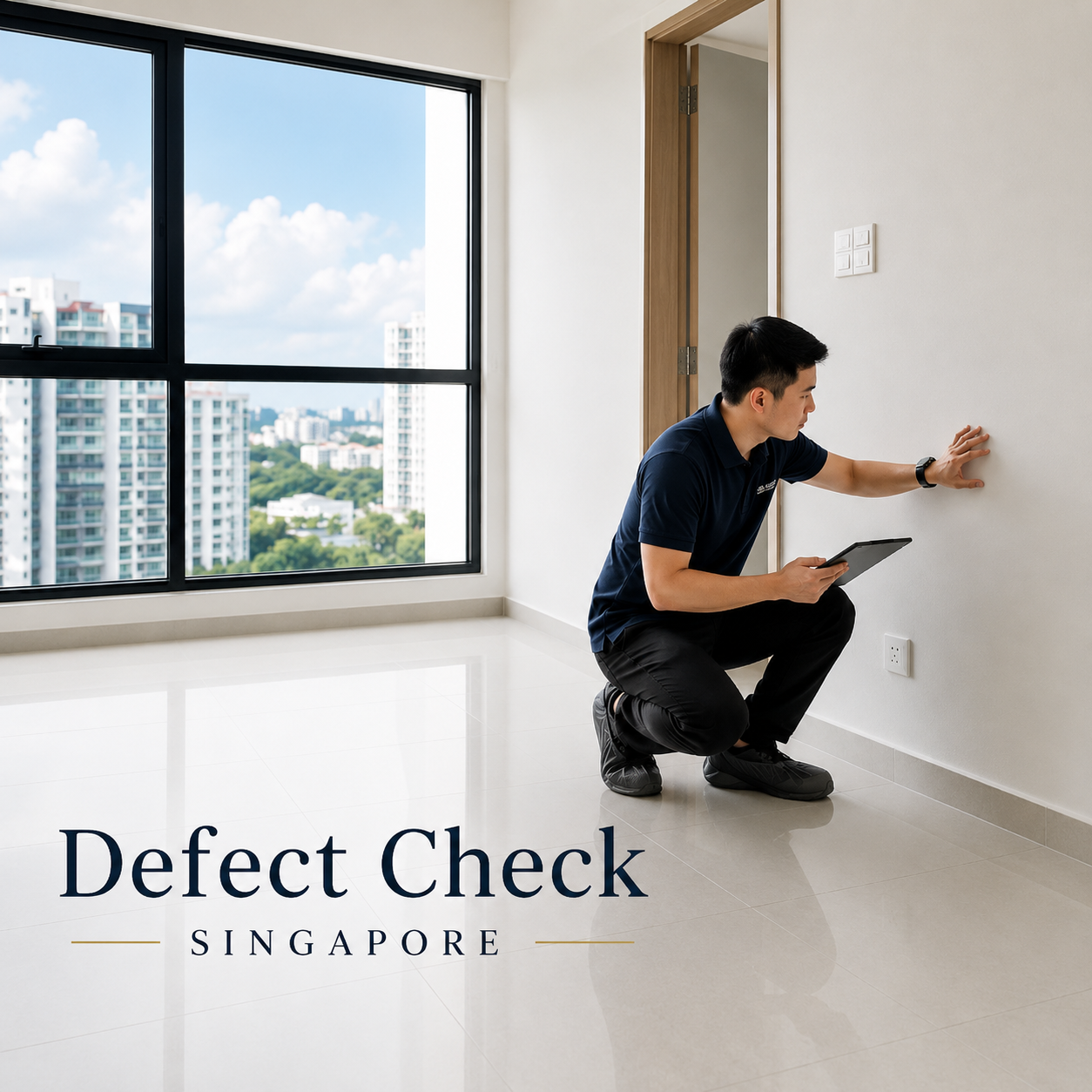
A systematic defect check in Singapore typically involves moving through the property area by area rather than simply looking around.
The inspection may cover:
Living and bedroom areas
Walls, ceilings, flooring, windows, doors and visible fittings.
Kitchen
Tiles, windows, plumbing fixtures and developer-provided fittings where applicable.
Bathrooms
Wall tiles, floor tiles, sanitary fittings, doors, drainage areas and visible finishing.
Service yard and balcony
Floor finishes, walls, windows, doors, drainage areas and other accessible surfaces.
Defects discovered during the inspection should be documented clearly with their location and description.
Photographs can also help homeowners understand and follow up on individual items.
Why Documentation Matters
Finding a defect is only the first step.
Clear documentation makes the rectification process easier to manage.
Instead of telling the contractor or developer that there are “several problems around the house”, homeowners can provide specific information such as:
Location: Master Bathroom
Area: Wall tile beside shower
Observation: Hollow sound detected
This makes it easier for the relevant party to locate and review the item.
A professional defect report can therefore be useful for keeping everything organised.
Should You Hire a Professional Defect Checker?
Homeowners can certainly inspect their own property.
However, a professional defect check service in Singapore may be useful for homeowners who want a more systematic inspection or who are unfamiliar with common workmanship issues.
Professional inspectors typically follow an organised inspection sequence and document observations across different areas of the unit.
This can be particularly useful for first-time homeowners who may otherwise focus mainly on obvious cosmetic defects.
Where Defect Checking Fits Into Your Property Journey
A simple sequence for a new property owner can look like this:
Key Collection → Defect Check → Defect Reporting → Rectification → Re-check → Renovation → Post-Renovation Inspection → Move In
Planning the inspection early helps avoid situations where renovation begins before the original property has been properly checked.
Final Thoughts
Buying a home is about more than choosing the right location, layout or renovation style.
The condition of the property itself matters too.
Whether you are collecting the keys to an HDB BTO, EC or condominium, carrying out a defect check in Singapore before renovation can help you understand the condition of your new home and identify workmanship issues before they become covered by subsequent renovation works.
At DefectCheck SG, we provide systematic property defect inspections with photographic documentation and detailed defect reports to help homeowners understand the condition of their property before moving forward with renovation.
If you have recently collected your keys, arranging your inspection early can make the next stage of your property journey much smoother.
Key Takeaways
- Conducting a defect check in Singapore before renovation helps document property conditions and identify workmanship issues.
- Assuming new properties are defect-free is a common misconception; many minor issues can remain after construction.
- A thorough defect inspection covers all areas, including living spaces, kitchens, and bathrooms, documenting issues with photographic evidence.
- Homeowners should consider hiring a professional for a systematic defect check to catch all potential problems, especially if they’re first-time buyers.
- Planning your defect check synchronously with key collection streamlines the process and prepares you for a smoother renovation.
Estimated reading time: 6 minutes
Table of contents
- Why Property Buyers Should Check Their Home Before Renovation
- New Property Does Not Always Mean Defect-Free
- BTO Defect Check in Singapore
- Condo Defect Inspection
- Defect Check vs Renovation Defect Check
- What Happens During a Defect Check?
- Why Documentation Matters
- Should You Hire a Professional Defect Checker?
- Where Defect Checking Fits Into Your Property Journey
- Final Thoughts