

Buying a new home is one of the biggest milestones in life. Whether you’ve just collected the keys to your BTO flat, condominium, landed property, or newly renovated home, ensuring your property is free from significant workmanship issues should be one of your top priorities. While a new home may look perfect at first glance, many defects can go unnoticed without a thorough inspection.
This is where a professional defect check plays an important role.
A defect check is a systematic visual inspection of a property’s accessible areas to identify visible workmanship defects, installation issues, and damage before you move in or begin renovation. Identifying these issues early allows homeowners to document them clearly and raise them with the relevant developer, contractor, or renovation company where applicable.
In this guide, we’ll explain what a defect check is, why it’s important, what is typically inspected, and why many homeowners in Singapore choose to engage a professional inspection service.
What Is a Defect Check?
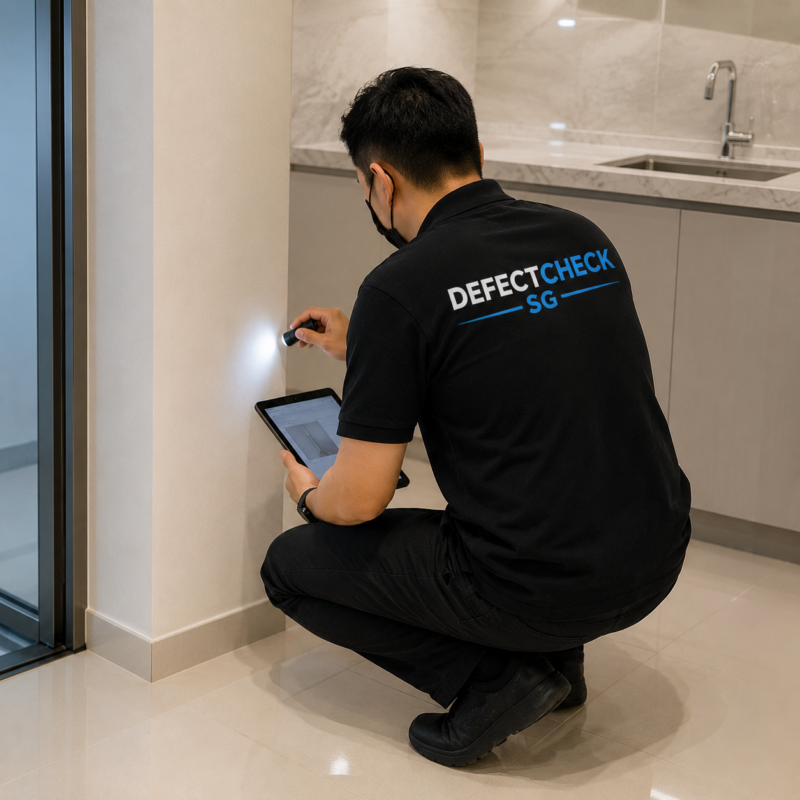
A defect check is a comprehensive visual inspection carried out to assess the workmanship and condition of a residential property. The inspection focuses on identifying visible defects across accessible areas of the home, including finishes, fixtures, fittings, doors, windows, walls, floors, ceilings, bathrooms, kitchens, and built-in carpentry.
Unlike a quick walkthrough during key collection, a structured defect inspection follows a systematic process to ensure every room and accessible area is examined carefully.
Each identified defect is typically documented with detailed report, descriptions, and the exact location within the property, making it easier for homeowners to keep track of rectification works.
Why Is a Defect Check Important?
Many homeowners assume that a newly completed property should be free from defects. In reality, even new developments may have workmanship issues that only become noticeable after a detailed inspection.
A professional defect check helps homeowners:
- Identify visible defects before moving in.
- Detect workmanship issues before renovation begins.
- Keep a clear record of observed defects.
- Reduce the risk of overlooking problems that may become more costly later.
- Better understand the overall condition of their property.
- Support discussions regarding rectification where appropriate.
Conducting the inspection before installing custom carpentry, flooring, or furniture also makes it easier to inspect surfaces that may later become concealed.
Common Defects Found During a Defect Check
Every property is unique, but certain workmanship issues are commonly observed during residential inspections.
Wall Defects
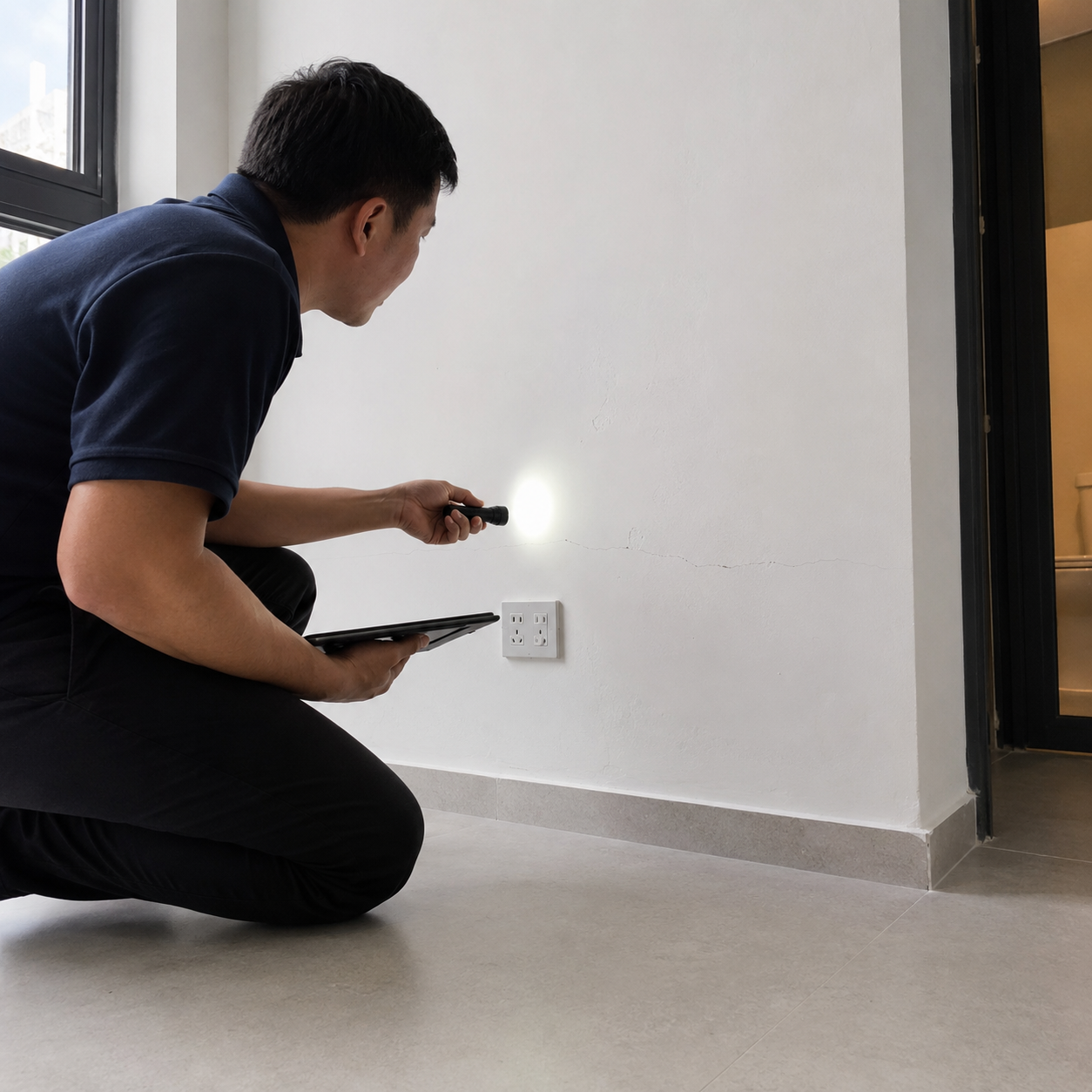
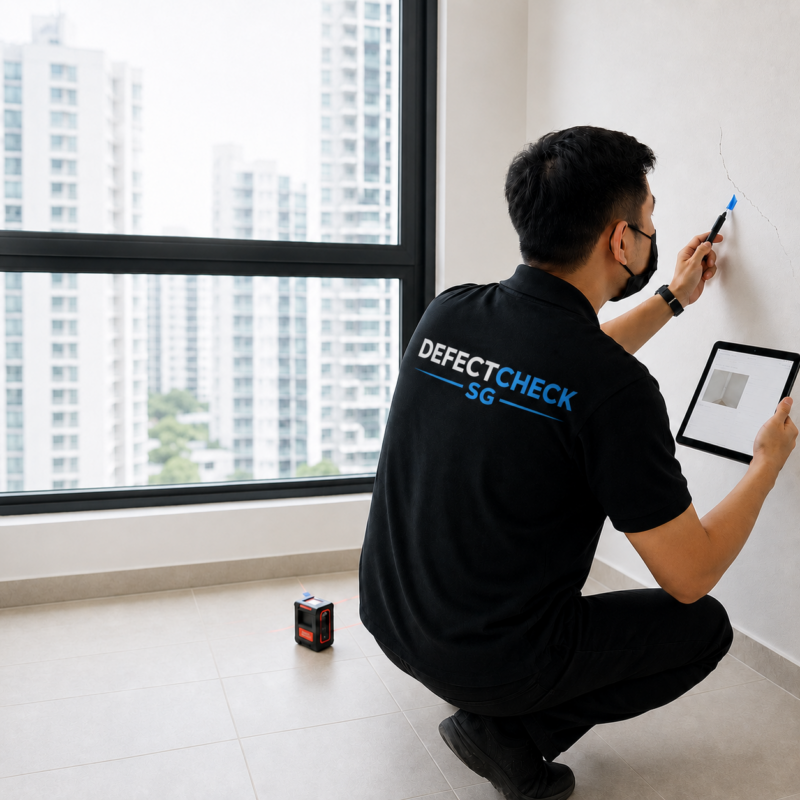
Walls are inspected for cracks, uneven plastering, dents, chips, paint imperfections, stains, and other visible finishing issues. Even minor imperfections can affect the overall appearance of your home and may indicate areas that require attention.
Floor Defects
Floor inspections focus on identifying hollow tiles, cracked tiles, uneven surfaces, tile lippage, poor grouting, scratches, chipped edges, and loose flooring. Properly installed flooring contributes to both safety and durability.
Ceiling Defects
Inspectors examine ceilings for cracks, uneven paint finishes, stains, water marks, patching defects, and other visible workmanship concerns.
Door Defects
Doors should open and close smoothly without excessive gaps or misalignment. Common observations include damaged laminates, scratches, faulty locks, loose handles, improper alignment, and poor installation.
Window Defects
Windows are visually checked for damaged frames, scratches on glass, lock operation, alignment, visible gaps, and general workmanship. Properly functioning windows are important for ventilation, security, and weather resistance.
Kitchen Defects
Kitchen inspections typically include cabinets, drawers, hinges, soft-closing mechanisms, countertops, sinks, visible plumbing fittings, silicone finishes, and general installation quality.
Bathroom Defects
Bathrooms receive close attention because moisture-related issues can become expensive if left unresolved. Inspectors visually assess floor finishes, wall tiles, sanitary fittings, basins, shower fittings, silicone workmanship, floor traps, and visible signs of water-related issues.
Electrical Fittings
Accessible electrical fittings such as switches, socket faceplates, and visible installation quality are visually inspected for alignment and workmanship. Functional electrical testing beyond a visual inspection may require a licensed electrician.
Plumbing Fixtures
Visible plumbing fixtures including taps, mixers, sinks, basins, and exposed pipe connections are checked for installation quality and any obvious signs of leakage or damage.
Who Should Arrange a Defect Check?
A defect inspection is beneficial for many different types of homeowners.
New BTO Homeowners
After collecting the keys, a BTO defect check allows homeowners to identify visible defects before renovation works commence.
Condominium Owners
Even newly completed condominiums may contain workmanship issues that are easier to address before move-in.
Landed Property Owners
Larger homes naturally have more inspection points. A structured inspection helps ensure accessible areas throughout the property are assessed thoroughly.
Post-Renovation Homeowners
After renovation, a defect inspection can identify visible workmanship issues before final acceptance of the completed works.
Property Buyers
For resale or pre-purchase situations, a professional inspection provides buyers with a clearer understanding of the property’s visible condition before making important decisions.
DIY Defect Check vs Professional Inspection
Many homeowners consider performing their own inspection. While a DIY walkthrough may identify obvious issues, smaller workmanship defects can be easily overlooked.
Professional inspectors generally follow a systematic room-by-room inspection process, document findings consistently, and prepare detailed reports with detailed report and descriptions. This organised documentation helps homeowners keep track of identified defects and communicate observations more effectively.
What Happens During a Professional Defect Check?
Although inspection methods may vary between companies, the process generally includes:
- A systematic visual inspection of accessible areas.
- Identification and documentation of visible defects.
- Detailed report of each observation.
- Preparation of a detailed digital defect report.
- Delivery of the report for the homeowner’s reference.
Some inspection providers may also offer follow-up services depending on their service package.
What Does a Defect Report Include?
A professional defect report typically contains:
- Detailed Report for Submission.
- Description of each defect.
- Room location.
- Reference numbering.
- Organised defect listings.
- Summary of observations.
A well-prepared report makes it easier to monitor rectification progress and refer back to previously identified issues.
Can Every Defect Be Identified?
No inspection can identify every possible issue within a property.
A standard defect check is generally a visual, non-invasive inspection carried out on accessible areas at the time of inspection. Concealed defects, hidden services, structural issues requiring engineering assessment, or defects that only develop over time may not be detectable without specialised equipment or invasive investigations.
Understanding these limitations helps homeowners set realistic expectations regarding the scope of the inspection.
Preparing for Your Defect Check
To help ensure a smooth inspection, homeowners are encouraged to:
- Activate the water supply if available.
- Activate electricity where possible.
- Ensure all rooms are accessible.
- Remove unnecessary obstructions.
- Prepare any relevant handover documents.
- Allocate sufficient inspection time based on the property’s size.
Good preparation allows the inspection to be carried out more efficiently.
Frequently Asked Questions
How long does a defect check take?
Inspection duration varies depending on the property’s size, layout, and condition. Larger homes naturally require more time.
Is a defect check only for BTO flats?
No. Defect inspections are suitable for BTO flats, HDB homes, condominiums, landed properties, and homes that have recently completed renovation.
When should I arrange a defect check?
Many homeowners choose to arrange the inspection shortly after key collection and before renovation begins, while all surfaces remain fully accessible.
Can I perform my own defect check?
Yes, but a professional inspection offers a more systematic assessment and comprehensive documentation of visible workmanship issues.
Protect Your Home Investment
A new home represents a significant investment, and taking the time to arrange a professional defect check can provide valuable insight into its visible condition before renovation or move-in.
By identifying and documenting workmanship issues early, homeowners can address concerns more efficiently and begin the next stage of their homeownership journey with greater confidence.
At Defect Check SG, we provide comprehensive visual defect inspections across Singapore for BTO flats, HDB homes, condominiums, landed properties, and post-renovation homes. Our detailed digital reports include detailed report, precise defect descriptions, and organised documentation to help homeowners understand the condition of their property.
If you’re collecting your keys soon, consider scheduling a professional defect check to help protect one of your most valuable investments.