

Singapore’s property market continues to stay active in 2026, with homeowners buying new launches, collecting BTO keys, purchasing resale flats and preparing properties for renovation.
For homeowners, however, buying the property is only the beginning. Before renovation starts, understanding the actual condition of the home can be just as important.
This is where a defect check can play an important role.
Singapore Property Market in 2026
The Singapore residential property market has continued to see significant activity in 2026.
According to URA, private residential property prices increased by 0.5% in the second quarter of 2026, while developers sold 2,141 private residential units during the quarter.
The HDB market has also remained active. HDB’s Resale Price Index decreased by 0.3% in the second quarter of 2026, while resale transaction volume increased by 1.8% from the previous quarter.
At the same time, new homes continue to enter the market. HDB launched 6,952 flats across seven projects during its June 2026 BTO sales exercise.
With homeowners purchasing new and resale properties across Singapore, renovation planning remains an important part of the homeownership journey.
But before selecting tiles, carpentry, flooring or interior finishes, homeowners should first understand the existing condition of their property.

Why Defect Check Matters Before Renovation
It can be tempting to start renovation immediately after receiving the keys.
However, once renovation begins, certain original surfaces may become covered by:
- Built-in carpentry
- Vinyl flooring
- Feature walls
- False ceilings
- Kitchen cabinets
- Wardrobes
- Bathroom fittings
- Other renovation finishes
This can make some areas more difficult to inspect later.
Conducting a defect check before renovation allows homeowners to examine visible and accessible areas while the property is still relatively unobstructed.
What Is a Defect Check?
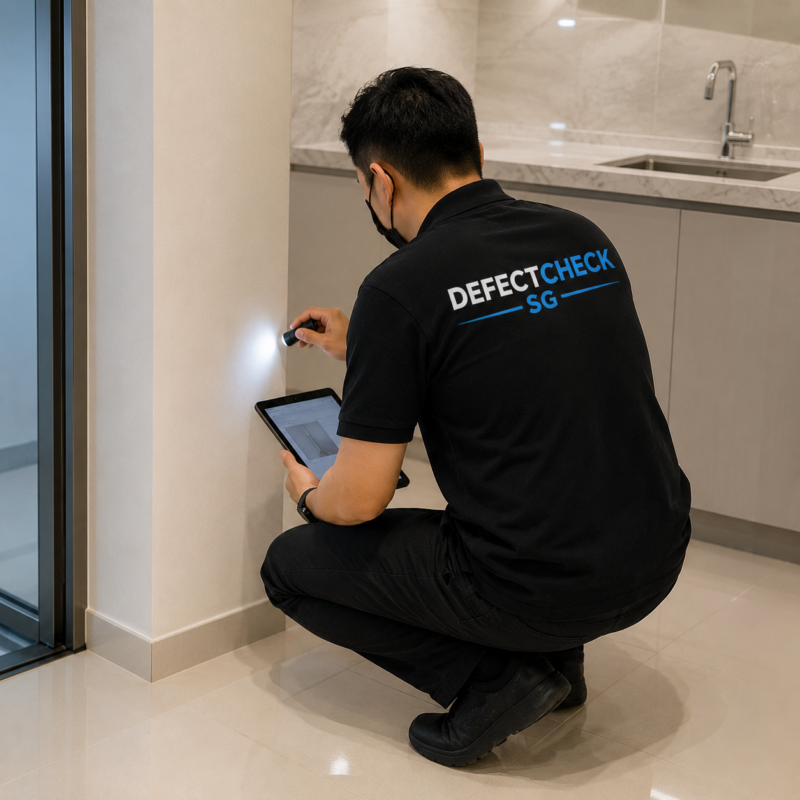
A defect check is a systematic inspection of a property’s visible and accessible areas to identify workmanship issues, finishing problems and other observable defects.
Depending on the property, the inspection may include areas such as:
- Floor and wall tiles
- Walls
- Ceilings
- Doors
- Door frames
- Windows
- Bathrooms
- Sanitary fittings
- Plumbing fixtures
- Electrical points
- Grouting and silicone
- Other accessible finishes
Any defects identified can be photographed, described and recorded according to their locations.
This provides homeowners with a clearer record of the property’s condition before renovation starts.
Common Defects Homeowners May Discover
Even a property that appears completed at first glance can have workmanship issues that are not immediately noticeable during a casual walkthrough.
Hollow Tiles
Hollow tiles are one of the common concerns homeowners may look out for during a defect check.
Accessible tiled surfaces can be systematically tapped to identify areas that produce a noticeably different sound.
Suspected areas can then be marked and documented for further assessment or rectification.
This is particularly useful before cabinets or other renovation works cover portions of the tiled area.
Wall and Ceiling Defects
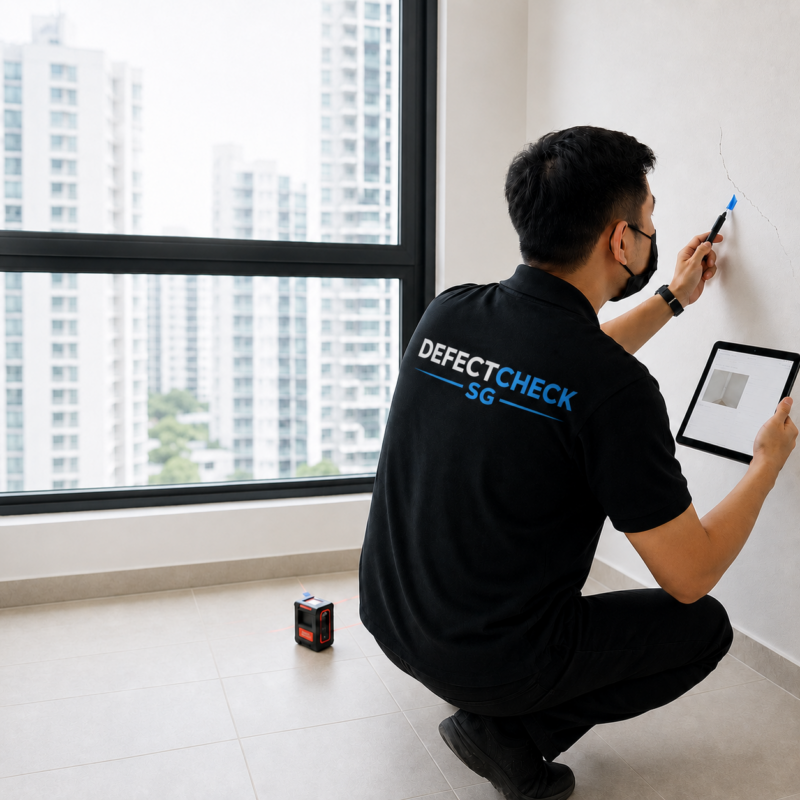
Visible issues may include:
- Cracks
- Uneven surfaces
- Stains
- Chips
- Poor finishing
- Inconsistent paintwork
These defects can be photographed and recorded before renovation changes the original condition of the surfaces.
Door and Window Issues
Doors and windows should generally operate smoothly.
A home defect inspection may identify issues such as:
- Uneven gaps
- Misalignment
- Difficulty opening or closing
- Loose fittings
- Scratches
- Chips
- Poor finishing around frames
- Sealant defects
Testing these areas systematically can help homeowners identify issues that may otherwise only become noticeable after moving in.
Bathroom Defects
Bathrooms contain many different components within a relatively small area.
Areas commonly checked may include:
- Floor and wall tiles
- Grouting
- Silicone
- Basins
- Taps
- WC fittings
- Shower fittings
- Floor traps
- Drainage
- Visible pipe connections
Identifying visible workmanship or functional issues before renovation can make the subsequent rectification process clearer.
New BTO Homes and Defect Checks
For homeowners collecting a newly completed HDB flat, it can be useful to carry out an inspection before beginning major renovation works.
The empty-unit stage provides better access to walls, floors, doors, windows and other original finishes.
With thousands of BTO flats continuing to enter Singapore’s housing pipeline, defect inspection remains relevant to homeowners preparing to move from key collection into renovation. HDB’s June 2026 exercise alone offered 6,952 flats across seven projects.
A professional defect check can help homeowners organise their findings rather than relying only on a quick visual walkthrough.
What About New Condominiums?
The same principle applies when taking possession of a newly completed private property.
Before extensive renovation or carpentry begins, homeowners can inspect accessible areas and document visible workmanship issues.
Singapore’s private residential market remains active, with developers selling 2,141 new private residential units, excluding executive condominiums, in the second quarter of 2026.
For new condo owners preparing for renovation, carrying out a defect inspection early provides a clearer picture of the condition of the unit before additional works are introduced.
What About Resale Properties?
A resale property is different from a newly completed home.
It may contain existing finishes, previous renovation works and signs of normal wear.
A resale home inspection can therefore focus on the visible condition of accessible areas and help homeowners better understand what they are taking over before deciding what to retain, repair or renovate.
This can be particularly useful when planning the renovation budget.
Instead of discovering obvious issues halfway through renovation, homeowners can identify areas requiring attention earlier in the planning process.
Defect Check First or Renovation First?
Where practical, the defect check should be carried out before major renovation works begin.
A simple sequence can be:
Key collection → Defect Check → Rectification → Renovation → Final Checks → Move In
Doing the inspection earlier helps establish the original condition of the home.
Once renovation contractors begin modifying or covering surfaces, determining whether certain issues were pre-existing may become more difficult.
A Defect Report Provides a Useful Record
A proper inspection is not only about finding defects.
Documentation is also important.
A detailed defect report can contain:
- Photographs
- Defect descriptions
- Locations
- Areas requiring attention
This gives homeowners a clearer reference when communicating with the developer, contractor or other relevant party.
If rectification is subsequently completed, accessible reported items can also be checked again where required.
Buying a Home? Don’t Forget the Condition of the Property
Property prices, location, renovation budgets and interior design usually receive most of the attention during the home-buying process.
But the physical condition of the property should not be overlooked.
Whether you are collecting the keys to a BTO, moving into a new condominium or renovating a resale property, carrying out a defect check in Singapore before major renovation works can help identify visible issues early and provide a clearer record of your home’s condition.
DefectCheck SG provides professional defect inspection services covering visible and accessible areas, including tiles, walls, ceilings, doors, windows, sanitary fittings and workmanship finishes.
For homeowners preparing for renovation, completing a professional defect check first can help you begin your renovation journey with a better understanding of the property you are working with.