

Singapore’s property market continues to change in 2026.
HDB resale prices fell 0.3% in the second quarter of 2026 after declining 0.1% in the first quarter, while private residential property prices increased 0.5% in Q2. At the same time, new housing supply remains substantial, with HDB planning around 19,600 BTO flats across three sales exercises in 2026.
With homeowners considering BTO flats, new condominiums, resale homes and renovation costs, it is easy to focus mainly on property prices.
But there is another part of property ownership that should not be overlooked: the defect check.
Regardless of whether property prices are rising, falling or stabilising, the physical condition of the home is a separate consideration. Understanding what you are receiving — and identifying visible defects early — can help homeowners make better decisions before renovation or moving in.
Singapore Property Prices Are Showing Different Trends in 2026
One interesting feature of the 2026 property market is that different housing segments are moving differently.
HDB’s Resale Price Index stood at 202.8 in Q2 2026, down 0.3% from the previous quarter.
Meanwhile, URA reported that overall private residential property prices increased by 0.5% in Q2 2026, bringing the increase for the first half of 2026 to 1.4%.
Within the private market, the picture was also mixed. Landed property prices increased 2.5% in Q2, while non-landed property prices decreased 0.1%.
What does this mean for homeowners?
Property prices may attract the headlines, but price alone does not tell you about the actual workmanship or condition of an individual home.
A $500,000 flat and a $2 million condominium can both have defects that require attention.
That is where a defect check becomes relevant.
What Is a Defect Check?
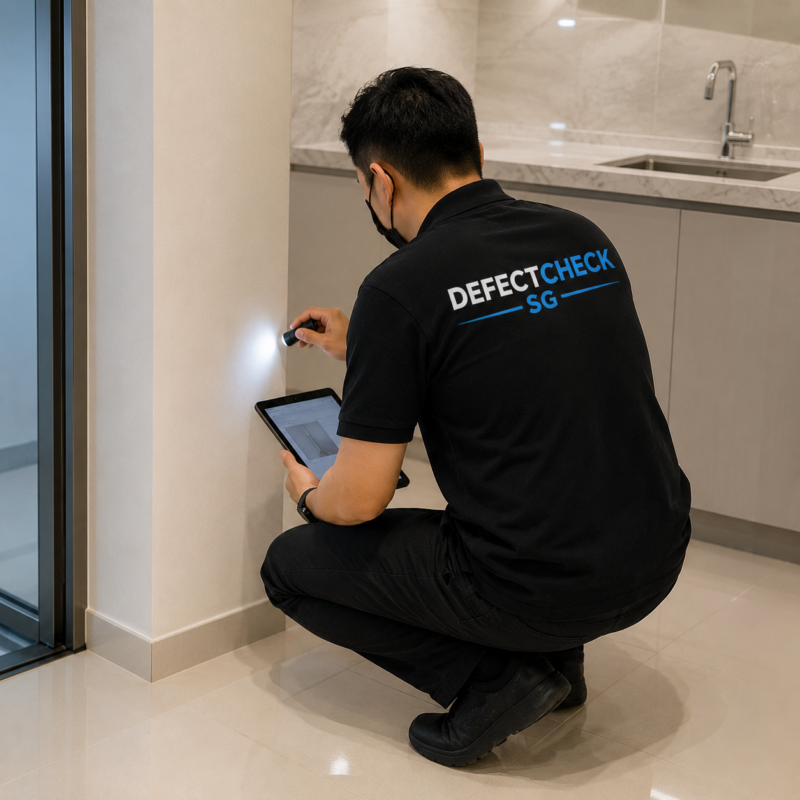
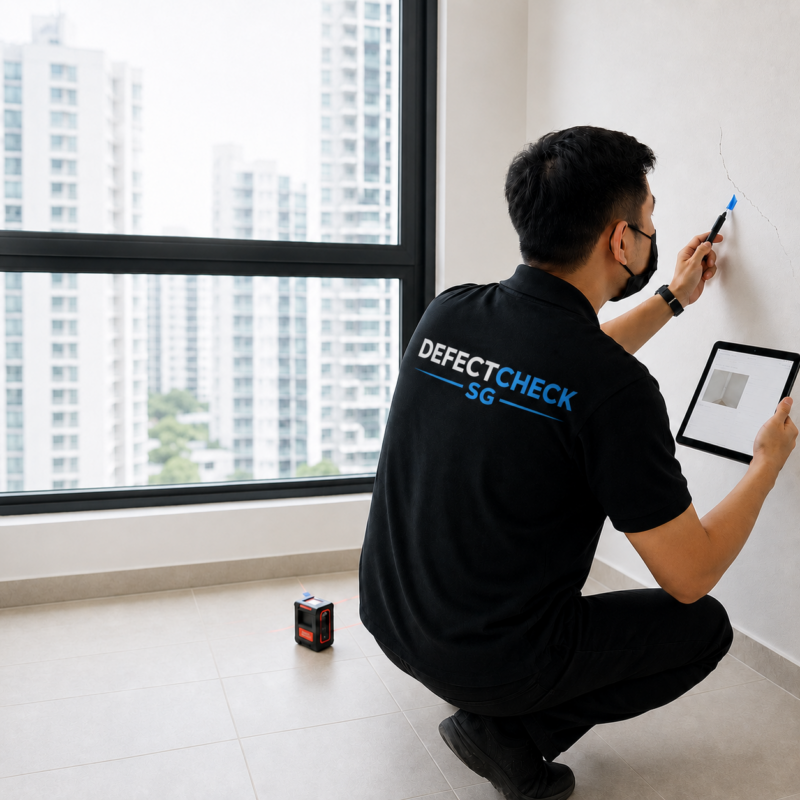
A defect check is a systematic inspection of visible and accessible areas of a property to identify workmanship issues, damaged finishes and other visible defects.
Common areas inspected may include:
- Floor and wall tiles
- Walls and ceilings
- Doors and door frames
- Windows
- Sanitary fittings
- Plumbing fixtures
- Electrical switches and sockets
- Developer-provided carpentry
- Built-in fittings
- Other accessible finishes
The purpose is not to determine how much the property is worth.
Instead, a defect check focuses on the physical condition and workmanship of the home at the time of inspection.
More BTO Supply Means More Homeowners Will Eventually Reach Key Collection
Another major Singapore property trend is the continued supply of new public housing.
HDB plans to launch around 19,600 BTO flats in 2026 across the February, June and October sales exercises.
The June 2026 BTO exercise alone offered 6,952 flats across seven projects in Ang Mo Kio, Bishan, Bukit Merah, Sembawang and Woodlands.
These new launches may seem unrelated to defect checks because buyers will not receive their keys immediately.
However, every completed BTO eventually reaches the same important stage:
Key Collection → Defect Check → Rectification → Renovation → Move In
When homeowners finally receive their flats, checking the original condition before renovation can help separate existing workmanship issues from subsequent renovation works.
Private Housing Supply Is Also Growing
The private residential market also has a sizeable pipeline.
URA reported that about 60,600 private residential units, including Executive Condominiums, are expected to be completed over the coming years. Around 25,900 of these units are expected to be completed by 2028.
For homeowners buying new launches today, this future supply means thousands of buyers will eventually move from the property-purchase stage to the key-collection stage.
And this is exactly when a condo defect check becomes relevant.
New condominiums may already include:
- Kitchen cabinets
- Wardrobes
- Countertops
- Bathroom fittings
- Timber or tiled flooring
- Doors
- Windows
- Sanitary fittings
- Electrical fittings
- Built-in fixtures
More developer-provided finishes mean there are also more individual components for homeowners to inspect when they receive the unit.
Private Resale Transactions Are Active Too
The resale segment of the private property market is another interesting trend.
URA recorded 3,813 private residential resale transactions in Q2 2026, up from 3,225 in Q1. Resale transactions represented 62% of all private residential sale transactions during the quarter.
For resale buyers, however, the purpose of an inspection can be slightly different.
A new-home defect check usually focuses more on original workmanship and finishes.
A resale property’s condition may instead reflect:
- Age
- Wear and tear
- Previous renovations
- Maintenance
- Previous repairs
- Existing modifications
Therefore, resale buyers may be more interested in understanding the home’s current visible condition and potential renovation requirements.
A defect check or broader property inspection can help provide more information, but it should not be treated as a guarantee that there are no concealed problems.
Property Price and Property Condition Are Two Different Things
This is perhaps the most important point for buyers.
Market value does not automatically equal physical condition.
A property may be in a highly desirable location and command a high price, while still having visible workmanship or maintenance issues.
Likewise, a more affordable property may be in relatively good physical condition.
When buying a home, it can therefore be useful to think about the property in separate layers:
1. Location and market value
How much is the property worth in the current market?
2. Layout and suitability
Does the property meet your family’s needs?
3. Renovation requirements
How much work will you need to carry out?
4. Physical condition
Are there visible defects or areas that need attention?
A defect check mainly deals with the fourth area.
Why Defect Check Before Renovation Still Matters
After spending a large amount on a property, renovation is often the next major expense.
But renovation can also cover original surfaces.
For example:
- Vinyl may be installed over existing flooring
- Carpentry may cover walls
- False ceilings may conceal original ceiling surfaces
- Feature walls may cover existing finishes
If a homeowner discovers an issue only after these works are completed, identifying the original source can become more difficult.
Conducting a defect check before renovation gives the homeowner an opportunity to inspect the original condition while areas are still visible and accessible.
What Defects Should New Homeowners Look Out For?
Common visible workmanship concerns may include:
Hollow or Damaged Tiles
Tiles may have hollow areas, cracks, chips, stains or damaged edges.
Wall and Ceiling Defects
Homeowners may encounter cracks, uneven finishes, paint imperfections or surface damage.
Door Alignment
Doors may have uneven gaps, scratches, loose fittings or difficulty opening and closing.
Window Issues
Possible findings can include damaged finishes, scratches, loose components or alignment concerns.
Plumbing and Sanitary Fittings
Accessible taps, basins, toilets, floor traps and exposed plumbing areas can be checked for visible workmanship or operational concerns.
Finishing Issues
Small workmanship defects may include scratches, chips, gaps, uneven silicone, stains and inconsistent joints.
These may not affect property market prices, but they can still matter to the homeowner who will be living in the property.
What About Post-Renovation Defect Checks?
Property ownership does not stop at key collection.
Once renovation is completed, homeowners may want to conduct a post-renovation defect check to review visible workmanship.
The focus is different from checking the original developer finishes.
A post-renovation check may look at areas such as:
- Carpentry alignment
- Cabinet doors and drawers
- Laminate finishes
- Silicone application
- Flooring
- Doors
- Tiles
- Sanitary fittings
- Gaps between finishes
- Scratches and chips
- Loose fittings
This creates two useful checkpoints:
Before renovation: Check the original property.
After renovation: Check the renovation workmanship.
Does a Slower HDB Resale Market Make Defect Checks Less Important?
Not necessarily.
The HDB resale market recorded price declines in both the first and second quarters of 2026, but that is a market-level trend rather than an assessment of any individual property’s physical condition.
A buyer still needs to consider the specific flat being purchased.
For example, two resale flats in the same block can have very different renovation histories and maintenance conditions.
One may have been renovated recently.
Another may require extensive renovation.
Understanding the physical condition of an individual home therefore remains useful regardless of the direction of the overall property market.
Should Property Buyers Focus on Price or Condition?
Ideally, both.
Property price determines whether a home fits your financial plans.
Property condition can influence what happens after you purchase it.
A home that requires extensive renovation or rectification may involve additional time, planning and cost.
This is why property buyers should avoid looking only at the selling price.
Consider:
Purchase Price + Condition + Renovation Needs + Future Maintenance
Together, these provide a more complete picture of the home you are buying.
What Happens After a Defect Check?
For a newly completed property, the process may generally look like:
1. Key Collection
Collect your keys and obtain access to the property.
2. Defect Check
Inspect visible and accessible areas systematically.
3. Document Findings
Record the location, description and photographs of identified defects.
4. Submit Applicable Defects
Follow the relevant defect-reporting procedure.
5. Rectification
Allow the relevant party to attend to the reported items.
6. Re-check
Review the areas after rectification.
7. Renovation
Once important rectification works have been addressed, renovation can proceed with a clearer understanding of the original property’s condition.
Looking Beyond Singapore Property Prices in 2026
The latest property data shows a market that is still changing.
HDB resale prices have softened, private property prices continue to show modest overall growth, the Government continues to release new housing supply, and private residential resale activity remains significant.
But homeowners should remember that property statistics describe the market.
A defect check describes the individual home.
Both can matter, but they answer completely different questions.
Property trends may help you decide when, where and what to buy.
A defect check helps you understand what condition the home is actually in.
Final Thoughts
Singapore’s property market in 2026 continues to evolve, with changing resale prices, new BTO launches and a significant pipeline of private housing.
For buyers and homeowners, however, purchasing the property is only the beginning.
Once the keys are collected, attention shifts from market prices to the actual condition of the home.
Whether you are receiving a new BTO, condominium or preparing for renovation, carrying out a defect check at the appropriate stage can help identify visible workmanship issues early and provide clearer documentation before rectification or renovation begins.
In a property market where homeowners spend significant amounts purchasing and renovating their homes, understanding both property value and property condition can lead to better-informed decisions.