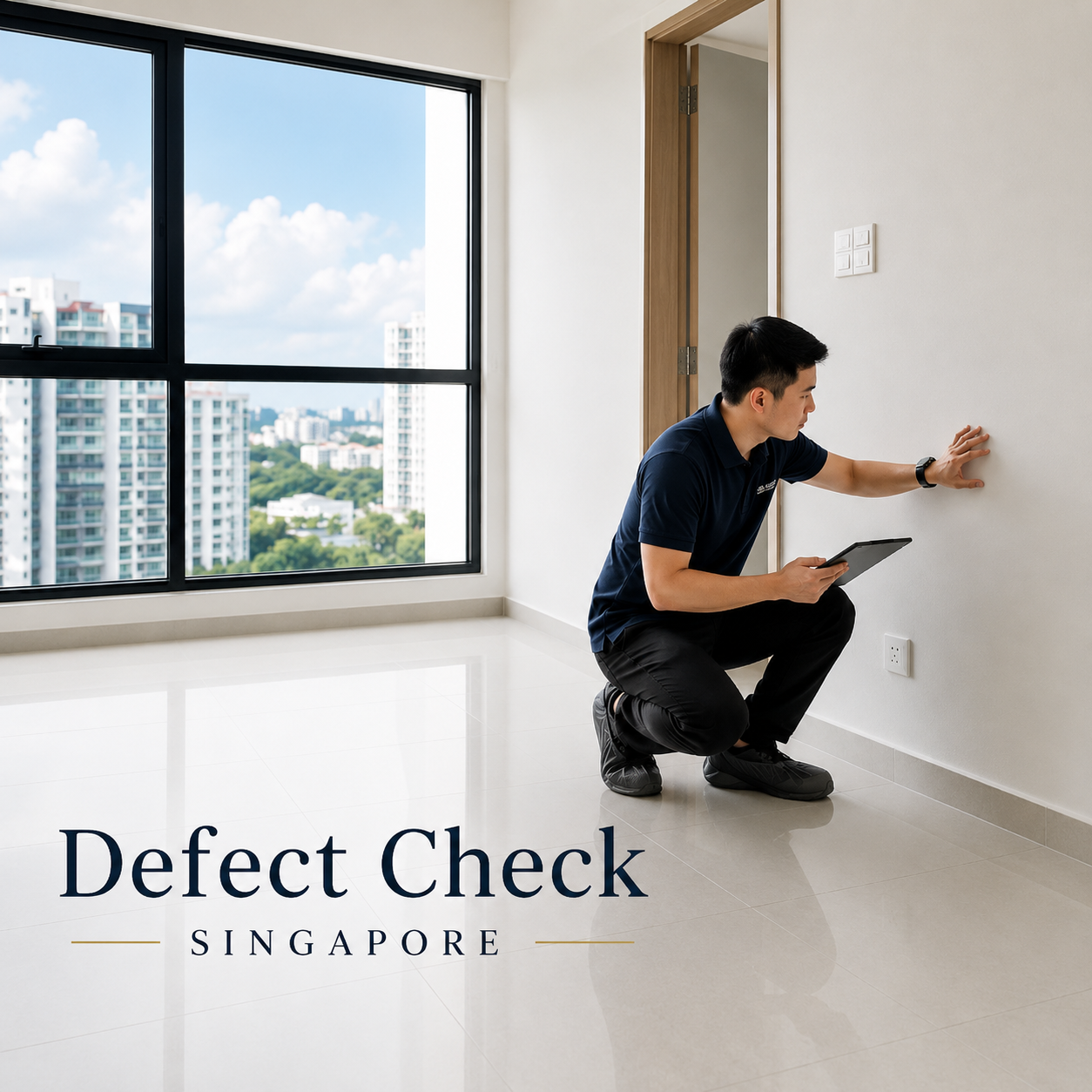


When homeowners collect the keys to a new BTO, condominium or resale property, most defect checks focus on visible workmanship issues such as hollow tiles, cracks, doors, windows, plumbing fittings and finishing.
Electrical systems deserve attention too.
However, there is an important distinction: a general property defect inspection is not the same as a professional electrical inspection or certification. In Singapore, electrical installation work, inspection and testing that requires professional electrical expertise should be carried out by an appropriate Licensed Electrical Worker (LEW) regulated by the Energy Market Authority (EMA).
What Is an Electrical Defect Check?
During a normal property defect check, the inspector may visually examine accessible electrical fittings and identify obvious workmanship concerns.
These could include:
- Uneven power socket faceplates
- Loose switches or sockets
- Visible gaps around electrical fittings
- Damaged covers
- Poor finishing around electrical points
- Lights or switches that do not appear to operate normally
- Obvious installation workmanship concerns
These observations can form part of an overall home defect inspection.
However, visual checks should not be confused with electrical certification, specialised electrical testing or verification that an electrical installation is safe.
When Should a Licensed Electrical Worker Be Engaged?
For electrical issues that require proper inspection, testing, installation, repair or professional assessment, homeowners should engage a Licensed Electrical Worker (LEW).
EMA states that LEWs are licensed to carry out electrical work including the inspection and testing of electrical installations within the scope of their respective licences.
EMA also advises homeowners to engage LEWs for electrical work such as wiring, rewiring and related electrical installation work.
This becomes particularly important when a defect involves something beyond cosmetic workmanship.
Examples include:
- Suspected wiring problems
- Circuit breaker issues
- Repeated power tripping
- Electrical leakage concerns
- Abnormal socket behaviour
- Rewiring works
- New electrical circuits
- Changes to the distribution board
- Electrical safety concerns
These should be assessed by an appropriately qualified electrical professional rather than relying only on a general defect inspection.
Defect Inspector vs Licensed Electrical Worker
The two services serve different purposes.
Property Defect Inspector
A property defect inspector typically focuses on the overall visible condition and workmanship of the property.
This may include:
- Flooring
- Walls and ceilings
- Doors
- Windows
- Bathrooms
- Plumbing fittings
- Carpentry
- Painting
- Silicone
- Tiles
- Accessible electrical fittings
Licensed Electrical Worker
An LEW has a professional role in electrical installations and may design, install, repair, maintain, inspect or test electrical installations according to the class and scope of the worker’s licence.
Therefore, homeowners should not treat a basic socket or switch check during a property inspection as an electrical safety certification.
Why Electrical Checks Matter Before Renovation
Renovation often involves significant electrical work.
Homeowners may add:
- Additional power sockets
- Lighting points
- Kitchen appliance points
- Air-conditioning isolators
- Feature lighting
- Smart-home switches
- Water heater points
- New circuits
Once carpentry, false ceilings and wall finishes are completed, electrical wiring may become less accessible.
This is why electrical planning should happen early in the renovation process.
For resale properties especially, homeowners planning significant electrical alterations may want an LEW to assess the existing installation before proceeding with major works.
Electrical Issues in New BTOs and Condominiums
Even in a newly completed property, homeowners may notice workmanship issues around electrical fittings.
For example:
Uneven socket
A socket or switch plate may appear tilted or may not sit neatly against the wall.
Visible gaps
There may be finishing gaps around the electrical faceplate.
Damaged faceplate
Scratches, chips or visible damage can occur during construction.
Switch operation
A homeowner may notice a switch or supplied electrical fitting does not appear to operate normally.
These issues can be documented during a defect check, while any suspected electrical safety issue should be referred to an LEW for professional assessment.
Electrical Checks for Resale Properties
Electrical considerations can become even more important when purchasing or renovating an older resale property.
Previous owners may have carried out electrical alterations over the years, and the new homeowner may also intend to substantially change the layout.
Before renovation, homeowners can consider the condition and planned use of:
- Existing sockets
- Lighting points
- Distribution board
- Kitchen appliance points
- Water heater points
- Air-conditioning electrical points
- Existing wiring
Where there are concerns about the electrical installation itself, an LEW should be engaged.
EMA provides a service through which consumers can search for licensed electrical workers.
What About RCCB Protection?
An important electrical safety device found in homes is the Residual Current Circuit Breaker (RCCB).
RCCBs help protect people against electric shock caused by electrical leakage.
EMA advises private homeowners who require RCCB installation to engage a Licensed Electrical Worker.
This is another good example of why specialised electrical work should be kept separate from the normal scope of a visual property defect inspection.
Defect Check + Electrical Inspection Before Renovation
For homeowners who want a more comprehensive approach, the property and electrical inspection stages can complement each other.
A practical sequence can be:
Key Collection → Property Defect Check → Rectification → Electrical Assessment Where Required → Renovation → Post-Renovation Defect Check
A property inspector can focus on workmanship and visible defects, while an LEW deals with electrical matters requiring qualified testing or assessment.
Together, these checks can give homeowners a better understanding of the condition of their property before major renovation works begin.
Post-Renovation Electrical Workmanship
After renovation, homeowners should also check the finishing around newly installed electrical points.
Common workmanship observations may include:
- Crooked socket faceplates
- Gaps around switches
- Scratched electrical covers
- Poor wall finishing
- Incorrect positioning compared with the renovation plan
- Loose-looking fittings
These may be documented during a post-renovation defect check.
However, where the concern relates to wiring, electrical safety, circuit protection or technical electrical performance, an LEW should be engaged.
Why This Distinction Protects Homeowners
A good defect inspection should clearly state what is and is not being assessed.
Property inspectors are useful for identifying visible workmanship issues across the home.
Electrical installations are a specialist area.
EMA regulates Licensed Electrical Workers in Singapore, and consumers can verify or search for licensed workers through EMA’s licensing services.
Knowing when to involve the right professional helps homeowners make better decisions during their renovation journey.
Final Thoughts
A comprehensive defect check in Singapore is not only about finding hollow tiles and paint defects.
Electrical fittings should also be visually reviewed as part of the overall condition of the property.
But homeowners should understand the boundary between a property defect inspection and a professional electrical inspection.
For visual workmanship defects, a property defect inspector can document the issue.
For electrical testing, safety assessment, installation, repair or certification, homeowners should engage an appropriate EMA Licensed Electrical Worker (LEW).