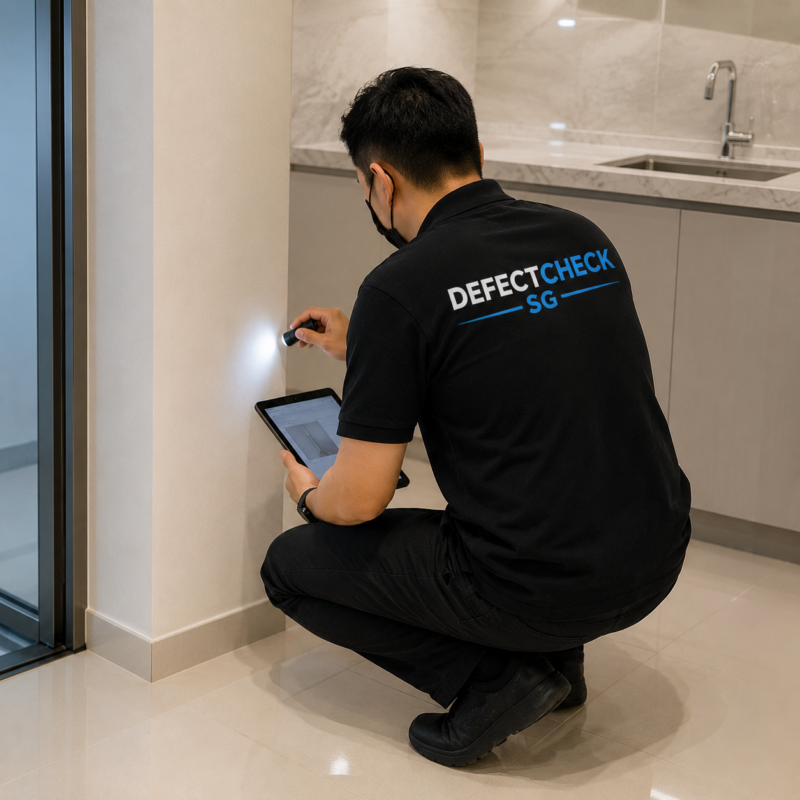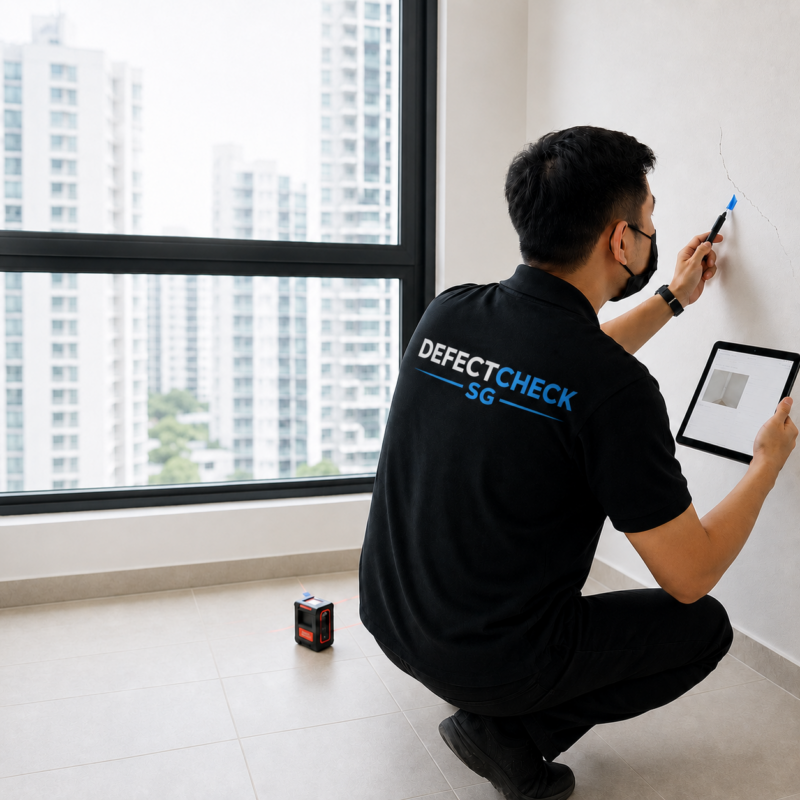


Hollow tiles are one of the common issues identified during a professional defect check in Singapore
While a tile may look perfectly normal from the surface, there may be insufficient bonding between the tile and the underlying surface. A proper defect check can help identify these areas before renovation work begins or before the Defects Liability Period ends.
What Is a Hollow Tile?
A hollow tile occurs when parts of the tile are not properly bonded to the substrate beneath it.
During inspection, the tile may produce a noticeably different sound when tapped compared with surrounding properly bonded tiles.
Generally:
Properly bonded tile: clearer, more solid tapping sound
Potential hollow tile: deeper or hollow “tok/thud” sound
Sound alone should still be assessed together with the location, extent and surrounding tiles.
What Causes Hollow Tile Defects?
Common causes can include:
- Insufficient tile adhesive or mortar
- Uneven adhesive coverage
- Poor installation workmanship
- Improper preparation of the surface
- Voids beneath the tile
- Movement or shrinkage of underlying materials
The severity can vary significantly from one tile to another.
Are Hollow Tiles Considered a Defect?
Hollow-sounding tiles may indicate incomplete bonding and should be assessed during a defect inspection.
A small isolated area does not automatically mean that the tile will fail. However, significant hollow areas can increase the risk of problems such as cracking, loosening or tile debonding over time.
This is why identifying the location and extent is important.
How Are Hollow Tiles Checked?
During a professional defect check, accessible tiled surfaces can be systematically tapped and assessed for changes in sound.
Suspected areas can then be:
- Identified
- Marked on site
- Photographed
- Recorded by location
- Included in the defect report
This provides homeowners with clearer documentation when raising defects with the developer or contractor.
Why Check Before Renovation?
For homeowners collecting a new property, carrying out the defect check before renovation is generally preferable.
Once renovation works begin, it may become more difficult to determine whether an issue originated from the original construction or subsequent renovation works.
Checking early also allows identified defects to be raised during the applicable Defects Liability Period.
Should Every Hollow Tile Be Replaced?
Not necessarily.
The appropriate rectification depends on factors such as:
- Size of the affected area
- Position of the hollow section
- Whether the tile is loose
- Presence of cracks
- Surrounding tile condition
- Developer or contractor’s assessment
The purpose of the defect inspection is primarily to identify and document the condition, after which the responsible party can determine the appropriate rectification method.
Defect Check for Hollow Tiles in Singapore
At DefectCheck SG, tiled areas are among the items assessed during our home defect inspections.
Our inspections can cover visible and accessible areas of the property, with identified defects documented with photographs, descriptions and locations for homeowners’ reference.
If you are collecting your BTO, EC or condominium, conducting a defect check before renovation can help you identify workmanship issues early.