

Home Inspector Singapore: 10 Reasons to Hire One Before Renovation
You have finally collected the keys to your new home.
The floors look clean, the walls are freshly painted and everything appears ready for renovation. During your first walkthrough, you may notice a few minor marks, but nothing seems serious.
Then renovation starts.
Your contractor discovers hollow tiles. A cabinet cannot be installed properly because the wall is uneven. A window does not close smoothly. A bathroom fitting starts leaking after you move in.
These are the types of issues that can be easy to miss during an excited key-collection walkthrough.
Hiring a professional home inspector gives homeowners an opportunity to identify visible defects before renovation, furniture installation or move-in. Instead of relying on a quick visual check, the inspector follows a systematic process and documents the condition of the property clearly.
For many Singapore homeowners, a home inspection is not simply about finding faults. It is about understanding the property, avoiding unnecessary disputes and starting the renovation journey with greater confidence.
What Does a Home Inspector Actually Do?
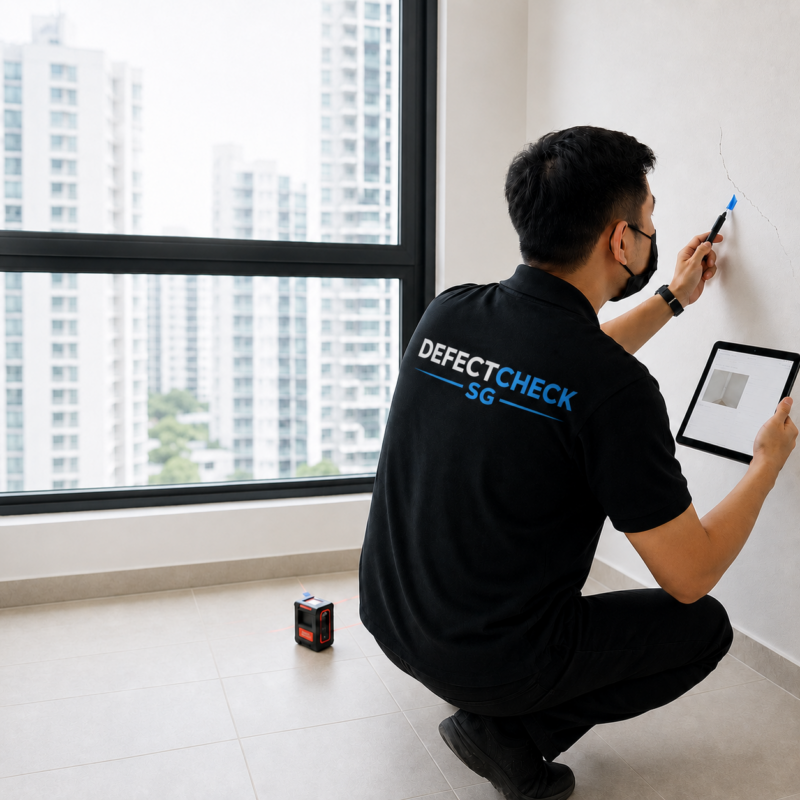
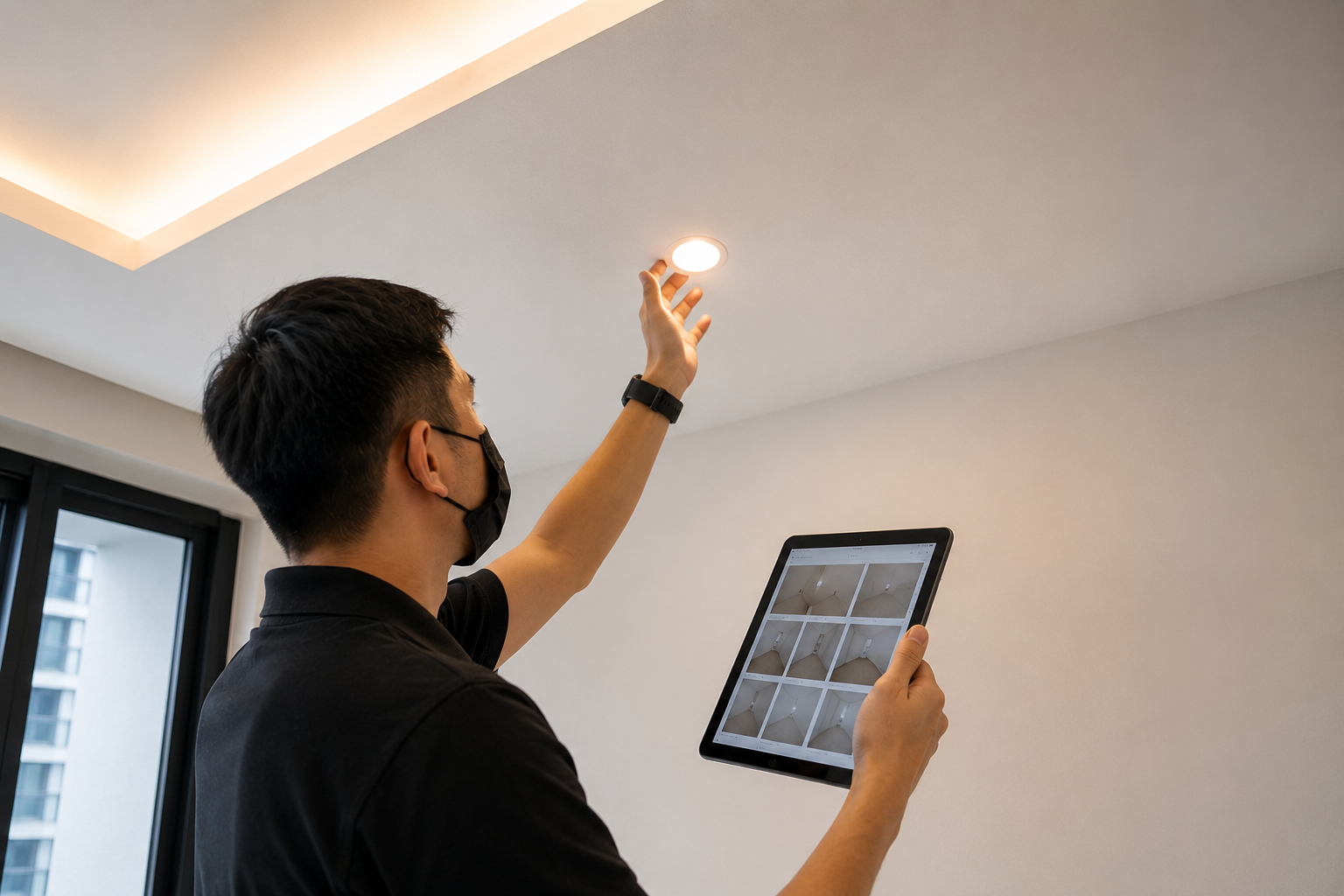
A home inspector carries out a structured visual inspection of the accessible areas of a residential property.
The inspector does not simply walk around looking for obvious damage. Each room is checked systematically, including its walls, flooring, ceiling, doors, windows, fixtures and fittings.
Depending on the type of property and inspection package, the home inspector may assess:
- Walls and ceilings
- Floor and wall tiles
- Doors and frames
- Windows and locks
- Kitchen fittings
- Bathroom fixtures
- Visible plumbing points
- Electrical switches and sockets
- Built-in carpentry
- Silicone and sealant finishes
- Balconies and service yards
- Other visible and accessible areas
When a defect is found, it is detailed report and recorded with a description and location.
This creates a clear reference for the homeowner when discussing rectification with the developer, contractor or renovation company.
Why a Quick Walkthrough Is Usually Not Enough
Most homeowners inspect their homes emotionally rather than systematically.
You may be thinking about furniture placement, renovation themes, kitchen layouts and where to position the television. It is easy to overlook workmanship issues when you are already imagining how the completed home will look.
A quick walkthrough may detect:
- A broken tile
- A large wall crack
- A scratched door
- A visibly leaking tap
However, it may miss less obvious issues such as:
- Hollow tiles
- Uneven tile edges
- Misaligned doors
- Loose handles
- Missing silicone
- Uneven cabinet doors
- Poor grout finishing
- Small gaps around fixtures
- Window alignment problems
- Loose sanitary fittings
A professional home inspector approaches the property differently. Instead of focusing on how the home looks overall, the inspector examines each component individually.
10 Reasons to Hire a Professional Home Inspector
1. Defects Are Easier to Fix Before Renovation
Before renovation begins, most areas of the property remain visible and accessible.
Once carpentry, vinyl flooring, furniture and appliances are installed, certain surfaces may become difficult or impossible to inspect.
For example, a wall defect may later be hidden behind a full-height cabinet. Flooring issues may become covered by vinyl. Uneven surfaces may only be noticed when carpentry installation begins.
Arranging a home inspection before renovation helps homeowners identify defects while the property is still in its original condition.
This also provides a clearer record of which issues existed before renovation works started.
2. A Home Inspector Knows Where to Look
Homeowners usually inspect what is directly in front of them.
A home inspector checks areas that are often overlooked, such as:
- Door edges and frames
- Corners of ceilings
- Silicone around basins
- Gaps between cabinet panels
- Floor traps
- Window locks
- Tile joints
- Skirting edges
- Areas behind doors
- Undersides of accessible fittings
Experience matters because many workmanship defects appear in predictable locations.
A trained inspector is familiar with common issues and knows which parts of the property require closer attention.
3. The Inspection Is More Systematic
Without a proper inspection routine, it is easy to check one room thoroughly and rush through another.
A professional home inspector usually follows a consistent room-by-room process.
For example, the inspector may begin with the entrance, move through the living area, examine each bedroom and then assess the kitchen, bathrooms, service yard and balcony.
This reduces the chance of missing an entire section of the property.
A systematic process also makes the final report easier to understand because findings are organised according to location.
4. Small Issues Are Documented Clearly
A defect may be obvious when you are standing in front of it, but difficult to explain later.
Saying, “There is something wrong with the bedroom wall,” may not be enough.
A professional defect report usually states:
- What the issue is
- Where it is located
- A detailed report of the defect
- A reference number
- The relevant room or area
For example:
Master bedroom, wall beside window: visible hairline crack and uneven paint finishing.
This level of documentation makes it easier for the relevant party to locate and review the issue.
5. It Can Reduce Miscommunication
Rectification discussions can become frustrating when defects are described vaguely.
Detailed report and descriptions reduce the need for lengthy explanations.
Instead of repeatedly pointing out the same issue, the homeowner can refer to the inspection report.
This is especially helpful when:
- Several defects are found
- Different contractors are involved
- Rectification takes place over multiple visits
- The homeowner cannot be present during every appointment
- Follow-up checks are required
The report becomes a central record that everyone can refer to.
6. It Helps You Prioritise Important Issues
Not every visible imperfection carries the same level of concern.
Some findings may be cosmetic, while others may affect functionality, durability or daily use.
For example:
- A small paint mark may be cosmetic
- A door that cannot close properly affects function
- A loose tap may worsen over time
- Hollow tiles may require closer assessment
- Visible water stains may require further investigation
A home inspector can help homeowners understand which issues should be raised first.
This makes the rectification process more manageable, particularly when a large number of observations are recorded.
7. It Saves Homeowners Time
A detailed home inspection can take several hours, depending on the size and condition of the property.
After the physical inspection, the findings still need to be organised, detailed report, labelled and compiled.
For homeowners who are already managing renovation appointments, furniture purchases, loans, moving arrangements and utility activation, this can become overwhelming.
Engaging a professional home inspector saves time by providing a structured inspection and organised report.
The homeowner can then focus on following up rather than creating the entire defect list from scratch.
8. It Provides an Independent View
A home inspector is not the person who built, renovated or sold the property.
Their role is to assess and document the visible condition of the home independently.
This can be useful when homeowners are unsure whether an issue is normal workmanship variation or something worth raising.
An independent inspection does not guarantee that every item will be accepted for rectification. However, it provides homeowners with clearer observations to support their discussions.
9. It Creates a Record Before Move-In
Once you move in, normal wear and tear begins.
Furniture may scratch surfaces. Appliances may block access. Daily use may change the condition of fixtures and fittings.
A pre-move-in inspection creates a record of the property before occupancy.
This may be useful for:
- New property handovers
- Renovation completion
- Rental move-in
- Post-renovation checks
- Pre-purchase assessments
The report shows what was visible at the time of inspection.
10. It Gives Homeowners Greater Peace of Mind
No visual inspection can promise a completely defect-free home.
However, knowing that the accessible areas have been checked systematically can provide reassurance.
Homeowners can proceed with renovation or move-in with a better understanding of the property’s visible condition.
That confidence is often one of the biggest benefits of hiring a home inspector.
Common Defects a Home Inspector May Find
Every property is different, but some defects are commonly observed across new and renovated homes.
Walls and Ceilings
Common findings include:
- Hairline cracks
- Uneven plastering
- Paint stains
- Poor patching
- Chips and dents
- Visible water marks
- Uneven finishing
Small cracks may be cosmetic, but recurring cracks or water stains may require further assessment.
Flooring and Tiles
A home inspector may identify:
- Hollow tiles
- Cracked tiles
- Chipped edges
- Tile lippage
- Poor grouting
- Uneven flooring
- Scratches and stains
- Loose floor transitions
These issues are easier to address before built-in carpentry and furniture are installed.
Doors and Frames
Common door defects include:
- Misalignment
- Uneven gaps
- Difficulty closing
- Loose handles
- Faulty locks
- Scratches
- Damaged laminate
- Doors hitting walls or cabinets
A properly installed door should generally operate smoothly without excessive force.
Windows
Window observations may include:
- Scratched glass
- Loose handles
- Locking issues
- Damaged frames
- Poor alignment
- Visible gaps
- Missing sealant
- Difficulty opening or closing
Window issues may affect ventilation, security and weather resistance.
Kitchen and Carpentry
Kitchen and built-in carpentry checks may identify:
- Misaligned cabinet doors
- Uneven panel gaps
- Loose hinges
- Missing soft-closing mechanisms
- Damaged laminate
- Countertop scratches
- Poor silicone finishing
- Drawers that do not operate smoothly
- Cabinets hitting nearby walls
Carpentry defects are especially relevant during post-renovation inspections.
Bathrooms
Bathrooms often require close attention because water-related problems can worsen if left unresolved.
Common observations include:
- Loose taps
- Poor silicone work
- Cracked or hollow tiles
- Loose sanitary fittings
- Rusty floor traps
- Drainage concerns
- Visible leaks
- Stains
- Misaligned fixtures
- Loose toilet seats
Suspected concealed leaks or waterproofing problems may require specialist testing.
Electrical and Plumbing Fittings
A visual inspection may cover:
- Uneven switches
- Loose socket faceplates
- Visible damage
- Loose taps
- Leaking mixers
- Poorly installed fittings
- Missing covers
- Exposed gaps
Electrical testing and concealed plumbing investigations should be performed by the appropriate licensed professionals when required.